If you have received a text message containing “WBU,” you may be wondering what it means.
In texting and online conversations, WBU means “What About You?” People use this common abbreviation to ask someone the same question they were just asked. It helps keep conversations friendly, natural, and quick.
You may see WBU in text messages, WhatsApp chats, Instagram DMs, Snapchat conversations, TikTok comments, and other social media platforms.
For example, if a friend asks how your day is going, you might reply, “Pretty good! WBU?” This means “Pretty good! What about you?”
The abbreviation is usually casual and friendly, although its tone can depend on the conversation.
In this guide, you will learn its full form, common uses, platform-specific meanings, realistic examples, and the best ways to reply when someone sends you WBU.
| Feature | Details |
|---|---|
| Abbreviation | WBU |
| Most common meaning | What About You? |
| Full form | What About You |
| Typical tone | Casual, friendly, conversational |
| Common usage | Text messages, chats, and social media |
| Example | “I’m doing great, WBU?” |
What Does WBU Mean in Text & Chat?
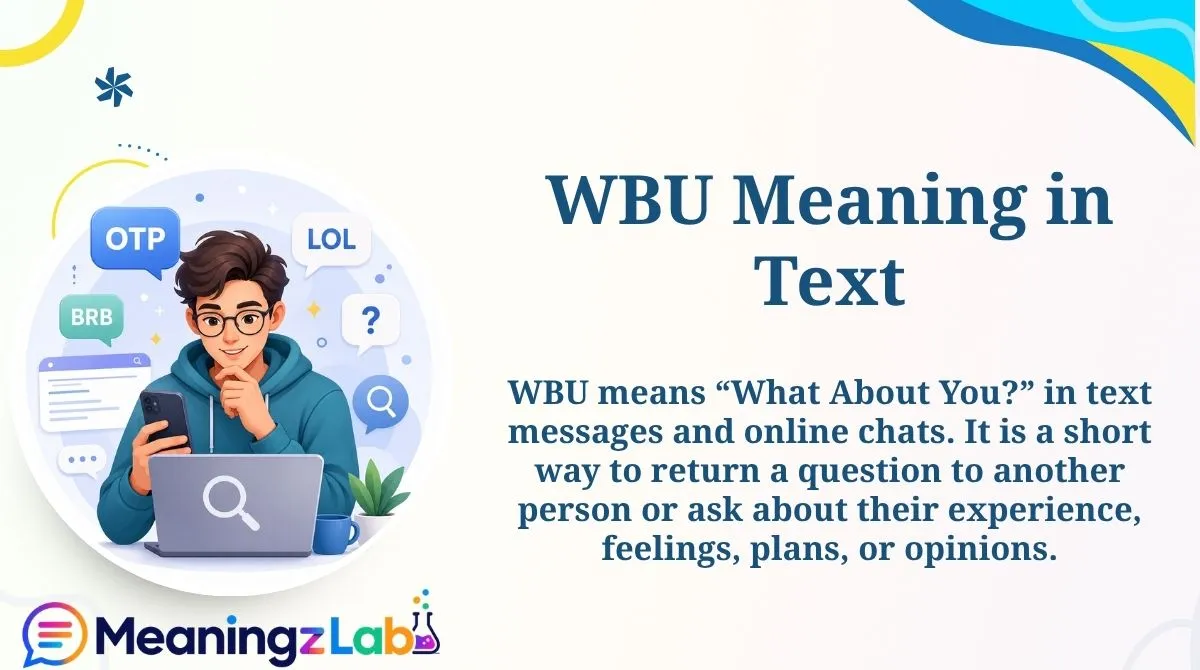
WBU means “What About You?” in text messages and online chats. It is a short way to return a question to another person or ask about their experience, feelings, plans, or opinions.
People often use WBU after answering a question. Instead of typing the complete phrase, they use three letters to keep the conversation moving.
For example:
Person A: “I’m so excited for the weekend!”
Person B: “Same here! WBU?”
In this conversation, Person B is asking whether Person A feels the same excitement or has something else planned.
WBU can work in many everyday situations, including conversations about school, work, hobbies, relationships, and personal interests. It is especially useful when both people want to share their thoughts without writing long messages.
Is WBU Friendly or Rude?
WBU is generally neutral to friendly. It is not usually rude, romantic, or sarcastic by itself. The surrounding words and the relationship between the people help determine its tone.
For example:
- “I’m fine, WBU? 😊” sounds warm and friendly.
- “Nothing much. WBU?” sounds casual and relaxed.
- “I already told you. WBU?” may sound impatient, depending on the conversation.
WBU is also common in conversations with friends and people you know online. However, in formal emails, business reports, or professional documents, writing “What about you?” is usually more appropriate.
The main point is simple: when someone sends you WBU, they usually want to know something about you in return.
Full Form, Stands For & Short Meaning of WBU
The full form of WBU is “What About You?” It is an abbreviation used in informal digital communication.
Each letter represents part of the phrase:
- W = What
- B = About
- U = You
The letter U replaces the word “you,” which is common in informal internet language. This style allows people to type quickly, especially during casual conversations.
WBU Meaning in Simple English
In simple English, WBU means “And you?” or “What about you?” It asks another person to share their answer, opinion, feelings, or situation.
Consider this example:
Person A: “I love watching movies after school.”
Person B: “Nice! WBU?”
Person B is asking whether Person A enjoys other activities too, or may be inviting them to share more about their interests. The precise meaning depends on the earlier conversation.
WBU vs. What About You
| Expression | Meaning | Typical use |
|---|---|---|
| WBU | What About You? | Casual texts and chats |
| What about you? | The complete phrase | Casual or formal conversations |
| And you? | A similar question | Everyday conversations |
| HBU | How About You? | Informal messages |
| WYD | What You Doing? | Asking about someone’s current activity |
WBU and HBU are closely related, but they are not always identical in use. WBU can refer to a wide range of topics, while HBU often returns a question in a similar way.
For example, “I like pizza, WBU?” asks about someone’s preference. “I’m going shopping, HBU?” asks what the other person is doing or planning.
Although WBU is widely understood in casual online conversations, it may be unfamiliar to people who do not regularly use texting abbreviations. In that case, simply writing the full phrase avoids confusion.
Origin, History & First Known Use of WBU
WBU developed as part of the broader habit of shortening everyday language in digital communication. Its exact first use is difficult to establish without a reliable historical record, so it would be misleading to assign it a specific invention date or claim that one person created it.
The abbreviation follows a straightforward pattern: take the first letters of a familiar phrase and use them to communicate the same idea with fewer characters. Similar forms became common in text messages, instant messaging, chat rooms, and online communities.
Why Did People Start Using WBU?
Short abbreviations are convenient when people want to communicate quickly. Early text messaging often involved character limits or slower typing methods. Shortening familiar expressions helped people exchange messages with less effort.
Even when those technical limits are no longer important, many users continue to prefer short forms because they feel natural in casual conversation.
WBU also fits the conversational habit of asking a question back. If one person shares an answer, the other can respond and invite the same information in just three letters.
For example:
Person A: “I’m studying for my exams. WBU?”
Person B: “I’m finishing my homework.”
The exchange is brief, but both people can share what they are doing.
How WBU Became Part of Online Language
As online messaging expanded across phones, social networks, and chat applications, abbreviations such as WBU became useful in different settings. They could move easily from a private text message to a social media conversation.
However, widespread use does not prove a specific origin date. The safest explanation is that WBU belongs to the larger family of informal internet abbreviations that developed through everyday communication.
Today, people can use either WBU or the complete phrase. The choice usually depends on personal style, the platform, and how formal the conversation needs to be.
How People Use WBU in Daily Conversations
People use WBU to return a question, show interest, or encourage someone else to share their thoughts. It helps make conversations feel balanced instead of allowing one person to do all the talking.
The abbreviation can fit many topics, including mood, food, entertainment, education, work, and weekend plans.
Asking About Feelings or Mood
WBU is useful when someone asks how you feel and you want to ask the same question back.
Person A: “I’m feeling much better today. WBU?”
Person B: “I’m doing well too, thanks!”
Here, WBU invites the other person to share their feelings. The tone is friendly and caring.
Talking About Likes and Dislikes
Friends often use WBU when discussing preferences.
Person A: “My favorite subject is English. WBU?”
Person B: “I prefer science.”
In this example, WBU asks for the other person’s preference. It keeps the exchange short and natural.
Discussing Plans
WBU can also be used when talking about schedules or activities.
Person A: “I’m going to visit my cousins this weekend. WBU?”
Person B: “I’m planning to stay home and relax.”
The abbreviation asks what the other person intends to do.
Keeping a Conversation Going
Sometimes, people use WBU simply because they want to keep chatting. It can show interest in another person’s experiences without asking a completely new question.
For example:
Person A: “I watched a really good movie last night.”
Person B: “Cool! WBU—have you watched anything interesting lately?”
This message uses WBU as part of a longer question. It shows that the abbreviation can appear naturally alongside regular English.
WBU does not automatically prove that someone is interested romantically or emotionally invested. It is usually a simple conversational prompt. The broader relationship and the rest of the conversation provide more meaningful clues.
WBU Meaning Across WhatsApp, Instagram, TikTok & Snapchat
The meaning of WBU usually stays the same across messaging apps and social media platforms. On WhatsApp, Instagram, TikTok, and Snapchat, it most commonly means “What About You?”
What changes is the setting in which people use it. A private message may feel more personal, while a public comment may be directed toward a wider audience.
WBU on WhatsApp
On WhatsApp, WBU commonly appears in private chats and group conversations. Friends may use it when discussing their day, plans, interests, or feelings.
Example:
Person A: “I’m staying home tonight. WBU?”
Person B: “I’m meeting some friends.”
The abbreviation returns the question and keeps the exchange moving.
WBU on Instagram
On Instagram, people may use WBU in direct messages or comments. It can help users exchange opinions about photos, activities, music, or everyday experiences.
Example:
Person A: “I love this song! WBU?”
Person B: “It’s been on repeat all day. 🎶”
The phrase asks whether the other person shares the same opinion.
WBU on TikTok
On TikTok, WBU may appear in comments or private messages about videos, trends, entertainment, and personal preferences.
Example:
Person A: “This is my favorite creator right now. WBU?”
Person B: “I watch their videos too!”
The meaning remains “What About You?” rather than becoming a separate TikTok-specific definition.
WBU on Snapchat
On Snapchat, WBU can appear in quick chats between friends. It may be used to discuss current activities, weekend plans, or personal interests.
Example:
Person A: “I’m watching a series tonight. WBU?”
Person B: “I’m playing games with my brother.”
Here, WBU asks what the other person is doing.
| Platform | Common context | Meaning |
|---|---|---|
| Private and group chats | What About You? | |
| DMs and comments | What About You? | |
| TikTok | Comments and messages | What About You? |
| Snapchat | Quick chats | What About You? |
In short, there is no widely established platform-specific change in the standard meaning. Always consider the surrounding conversation if the abbreviation appears in an unusual context.
Different Meanings of WBU in Other Fields
Although “What About You?” is the usual meaning of WBU in everyday texting, abbreviations can have different meanings in specialized settings. Three letters may represent an organization, a technical term, a school, or a name.
It is important not to assume that every appearance of WBU has the same definition.
WBU in Education and Organizations
In some contexts, WBU may be used as an abbreviation for an institution or organization. For example, WBU is used in the name of Williams Baptist University in the United States.
If WBU appears on a university website, an academic document, or a discussion about college admissions, it may refer to the institution rather than the texting phrase.
The surrounding words usually make the intended meaning clearer.
WBU in Business or Technical Writing
A company, department, or industry may use WBU as an internal abbreviation. However, the meaning can vary by organization, and a specialized definition should not be treated as universal.
If you encounter WBU in a work document, check the glossary, introduction, or nearby sentences before interpreting it.
How to Identify the Correct Meaning
Use these clues to understand WBU in different contexts:
- Casual conversation: “What About You?” is the most likely meaning.
- University or education discussion: It may refer to a university or another educational organization.
- Business or technical document: Check whether the document defines WBU as a specialized abbreviation.
- Unclear message: Ask the sender what they mean rather than guessing.
The key distinction is between a common texting meaning and a context-specific abbreviation. The letters alone may not be enough to determine the intended meaning.
Unless the conversation clearly points to another definition, “What About You?” is the most useful interpretation in ordinary text messages.
Common Confusions, Mistakes & Wrong Interpretations
WBU is a simple abbreviation, but people can misunderstand it when they are unfamiliar with texting slang or when the conversation lacks context.
The most common mistake is assuming that WBU has a hidden or complicated meaning when the sender is simply returning a question.
Confusing WBU With HBU
WBU means “What About You?” HBU means “How About You?” Both are used to ask another person a related question.
For example:
Person A: “I’m doing great. HBU?”
Person B: “I’m good too!”
The two abbreviations often serve the same conversational purpose. However, the words they shorten are slightly different.
Thinking WBU Is a Romantic Signal
WBU is not inherently romantic. A friend, classmate, relative, colleague, or new acquaintance can use it in a completely ordinary conversation.
For example, “I’m free this weekend, WBU?” may simply ask about your schedule. It does not automatically mean the sender wants a date.
Other messages, personal compliments, or the nature of your relationship may provide additional clues, but WBU alone does not establish romantic interest.
Assuming WBU Sounds Rude
The abbreviation is generally neutral. It may feel abrupt if sent without context, but short messages are common in casual texting.
Compare these examples:
- “I’m fine, WBU? 😊” sounds friendly.
- “Fine. WBU.” may sound distant, depending on the relationship.
- “I answered you already. WBU?” may communicate frustration.
The punctuation and surrounding words help create the tone.
Confusing It With an Unrelated Acronym
WBU may refer to an institution or specialized term outside casual messaging. A university discussion and a conversation between friends require different interpretations.
When in doubt, consider the topic, the sender, and the words around the abbreviation. If the meaning remains unclear, asking for clarification is the simplest solution.
Similar Terms, Alternatives & Related Slang
Several abbreviations serve a purpose similar to WBU. Some return a question, while others ask about a person’s activities or feelings.
Learning these alternatives can make online conversations easier to understand.
| Term | Full form | Main purpose |
|---|---|---|
| WBU | What About You? | Returns a question |
| HBU | How About You? | Asks the same question back |
| WYD | What You Doing? | Asks what someone is doing |
| HRU | How Are You? | Asks about someone’s well-being |
| WYA | Where You At? | Asks about someone’s location |
| NM | Not Much | Describes having little to report |
| IDK | I Don’t Know | Expresses uncertainty |
| TBH | To Be Honest | Introduces an honest opinion |
WBU vs. HBU
WBU and HBU are the closest alternatives. They often appear in similar conversations, especially when someone wants to return a question.
Person A: “I love summer. WBU?”
Person B: “Same! It’s my favorite season.”
The message asks for the other person’s opinion.
WBU vs. WYD
WYD asks what someone is doing, while WBU returns a question or asks about the other person’s situation.
For example:
Person A: “WYD tonight?”
Person B: “Nothing special. WBU?”
Person B answers the question and then asks the other person about their plans.
WBU vs. HRU
HRU means “How Are You?” It is often used to start a conversation or check on someone’s well-being. WBU generally returns a question that has already been raised.
Both expressions are common in casual messaging, but their purpose depends on the conversation.
When Should You Use the Full Phrase?
Use WBU with friends or people who are comfortable with texting abbreviations. In formal messages, professional emails, or conversations with someone who may not understand slang, write “What about you?” instead.
The full phrase is clear, polite, and suitable for almost any setting.
Examples of WBU in Real Chat Situations
The easiest way to understand WBU is to see how it works in different conversations. In the following examples, the abbreviation keeps messages short while inviting the other person to respond.
Example 1: Asking About Someone’s Day
Person A: “My day was pretty good. WBU?”
Person B: “Mine was great! I finished all my work. 😊”
Meaning: WBU asks the other person how their day went. The emoji adds a positive, friendly tone.
Example 2: Talking About School
Person A: “I have a math test tomorrow. WBU?”
Person B: “I have an English test on Friday.”
Meaning: The sender is asking about the other person’s school situation. The tone is neutral and conversational.
Example 3: Making Weekend Plans
Person A: “I’m thinking of going to the park this weekend. WBU?”
Person B: “That sounds fun! I might visit my cousins.”
Meaning: WBU asks what the other person plans to do.
Example 4: Sharing Food Preferences
Person A: “Pizza is my favorite comfort food. WBU? 🍕”
Person B: “I’d choose burgers any day!”
Meaning: The sender wants to know the other person’s preference. The emoji makes the message playful.
Example 5: A Playful Conversation
Person A: “I’m officially the laziest person today. WBU? 😂”
Person B: “I haven’t even left my bed yet!”
Meaning: Both people are joking about being lazy. The laughing emoji helps show that the message is humorous.
Example 6: A Potentially Sarcastic Reply
Person A: “You said you were busy all day.”
Person B: “I was. WBU, checking up on me now? 🙃”
Meaning: The second person may be joking or sounding sarcastic. The emoji and the previous conversation affect the tone.
Example 7: A Warm Conversation Between Friends
Person A: “I’m feeling much happier today. WBU? ❤️”
Person B: “I’m glad you’re feeling better! I’m doing okay too.”
Meaning: The sender asks about the other person’s feelings. The heart emoji can make the message feel caring, especially between close friends.
Example 8: An Unclear or Abrupt Message
Person A: “Fine. WBU?”
Person B: “I’m okay, thanks. Is everything all right?”
Meaning: The message may be neutral or slightly distant, but it is not enough to prove that the sender is upset. Asking a gentle follow-up can help clarify the tone.
These examples show that WBU usually keeps the same basic meaning. The surrounding words, punctuation, emojis, and relationship between the people determine how the message feels.
How to Reply When Someone Says WBU
When someone sends you WBU, the simplest response is to answer the question they are returning. Your reply should match the topic of the conversation and the level of formality.
You do not need to use another abbreviation if you prefer writing complete sentences.
Replying to a Friendly Message
If someone asks how you are doing, share a brief and honest answer.
Person A: “I’m doing great today. WBU?”
Person B: “I’m good too, thanks for asking! 😊”
This response sounds friendly and keeps the conversation open.
Replying About Plans or Activities
If WBU follows a question about plans, share what you intend to do.
Person A: “I’m going out for dinner tonight. WBU?”
Person B: “I’m staying home and watching a movie.”
You can also ask another question to keep the conversation going, such as “Have you decided where you’re going?”
Replying Playfully
If the sender is joking, you can respond with humor.
Person A: “I’m doing absolutely nothing today. WBU? 😂”
Person B: “Same here! Productivity can wait until tomorrow.”
This works well when both people enjoy playful conversations.
Replying When You Do Not Understand
If the conversation is unclear, it is fine to ask for more information.
Person A: “WBU?”
Person B: “Do you mean what am I doing or how I’m feeling?”
This response is useful when there is no clear question in the earlier messages.
Replying to a Message That Feels Rude
If the sender sounds impatient or sarcastic, avoid assuming their intention from three letters alone.
Person A: “Whatever. WBU?”
Person B: “I’m not sure what you mean. Is something bothering you?”
You can also keep your reply brief if you do not want to continue the conversation.
Here are a few quick replies you can use:
- Friendly: “I’m good, thanks! WBU?”
- Casual: “Not much, just relaxing.”
- Playful: “Trying to survive Monday! 😂”
- Caring: “I’m okay. How have you been?”
- Clarifying: “What do you mean by that?”
- Professional: “I’m doing well, thank you. How about you?”
The best response is one that feels natural to you. Match the sender’s tone when appropriate, but do not feel pressured to use slang if you prefer clear, complete sentences.
Is WBU Still Popular? Trends & Online Usage
WBU remains a recognizable form of informal texting language, but its exact popularity can vary across age groups, communities, and platforms. Without reliable, current usage data, it would be inaccurate to claim that it is trending, declining, or universally popular in 2026.
The abbreviation remains useful because it is short, easy to understand in context, and based on a common conversational phrase. People can use it whenever they want to return a question without typing the complete expression.
Why People Continue to Use WBU
There are several practical reasons someone might choose WBU instead of the full phrase:
- Speed: Three letters are quick to type.
- Convenience: It fits naturally into short messages.
- Informal tone: It suits relaxed conversations with friends.
- Familiarity: People who know texting abbreviations can understand it easily.
These benefits explain why abbreviations can remain useful even as messaging apps and typing habits change.
Is WBU Used by Younger People Only?
No. Texting abbreviations are not limited to one age group. Their use depends more on personal habits, familiarity with online communication, and the people involved in the conversation.
Some users prefer abbreviations, while others write complete sentences. Both styles are normal.
Should You Use WBU in 2026?
You can use WBU in casual texts, private messages, and relaxed social media conversations. It is a practical choice when you want to sound informal and keep your message brief.
However, writing “What about you?” is a better option when communicating with a new client, a manager, a teacher, or someone who may not understand the abbreviation.
Ultimately, WBU is a communication shortcut rather than a special trend. Its usefulness comes from the simple question it expresses, not from whether it appears in every online conversation.
Frequently Asked Questions
What does WBU mean in text messages?
WBU means “What About You?” It is a casual abbreviation used to ask another person the same question or invite them to share their opinion, feelings, or plans.
What does WBU stand for in texting?
WBU stands for “What About You?” The letters represent the words in the phrase, with U used as a short form of “you.”
Is WBU friendly or rude?
WBU is usually friendly or neutral. It can sound abrupt or sarcastic in certain conversations, but the abbreviation itself is not rude.
What does WBU mean on WhatsApp and Instagram?
On WhatsApp and Instagram, WBU generally means “What About You?” People use it in chats, direct messages, and comments to return a question.
What is the difference between WBU and HBU?
WBU means “What About You?” while HBU means “How About You?” Both often serve the same purpose: asking another person to share their answer.
How should I reply when someone texts WBU?
Answer the question being discussed. For example, if someone asks how your day was and then writes WBU, you can say, “Mine was good too, thanks!”
Does WBU mean someone likes you?
Not necessarily. WBU is a normal conversational abbreviation and does not prove romantic interest. Look at the broader conversation and the person’s behavior for more context.
Can WBU have another meaning?
Yes. In education, business, or technical contexts, WBU may represent an institution or a specialized term. In ordinary texting, however, “What About You?” is the usual meaning.
Is WBU formal or informal?
WBU is informal. It works well in casual messages with friends and acquaintances, but the complete phrase “What about you?” is better for formal or professional communication.
What does WBU mean when someone sends it alone?
When sent by itself, WBU usually means “What About You?” The sender is likely asking you to respond to a previous question or share your own situation. If there is no clear context, ask what they mean.
Conclusion
WBU means “What About You?” in text messages, social media chats, and other forms of informal online communication. People use it to return a question, share their experiences, and keep conversations moving without typing a long sentence.
You may see WBU on WhatsApp, Instagram, TikTok, Snapchat, and other messaging platforms. Its basic meaning usually stays the same, although the surrounding conversation can affect its tone. It may sound friendly, playful, neutral, or occasionally sarcastic, depending on the words and emojis used.
When someone sends you WBU, simply answer the question they are asking about you. You can respond with a short phrase, a complete sentence, or another question to continue the conversation. In formal settings, use “What about you?” instead.
Now that you understand WBU, you can explore related abbreviations such as HBU, WYD, HRU, and WYA to become more confident with everyday texting slang.

Evan Rellmont is a content writer and researcher who specializes in internet slang, text abbreviations, and social media language. He creates clear, helpful content to make modern online communication easier to understand.